

Kleine Antike Sammlung von 7 versilberten Spießen / Cocktail- und Vorspeisenspießen mit Jagd- und Ziermotiven, ca. 1885–1920
€150.00
nach §25a UStG Differenzbesteuert,
berechtigt nicht zum Vorsteuer-Abzug
zzgl. Versand
Nicht vorrätig
Beschreibung
7 versilberte Cocktail- und Vor-
speisenspieße ca. 1885 – 1920
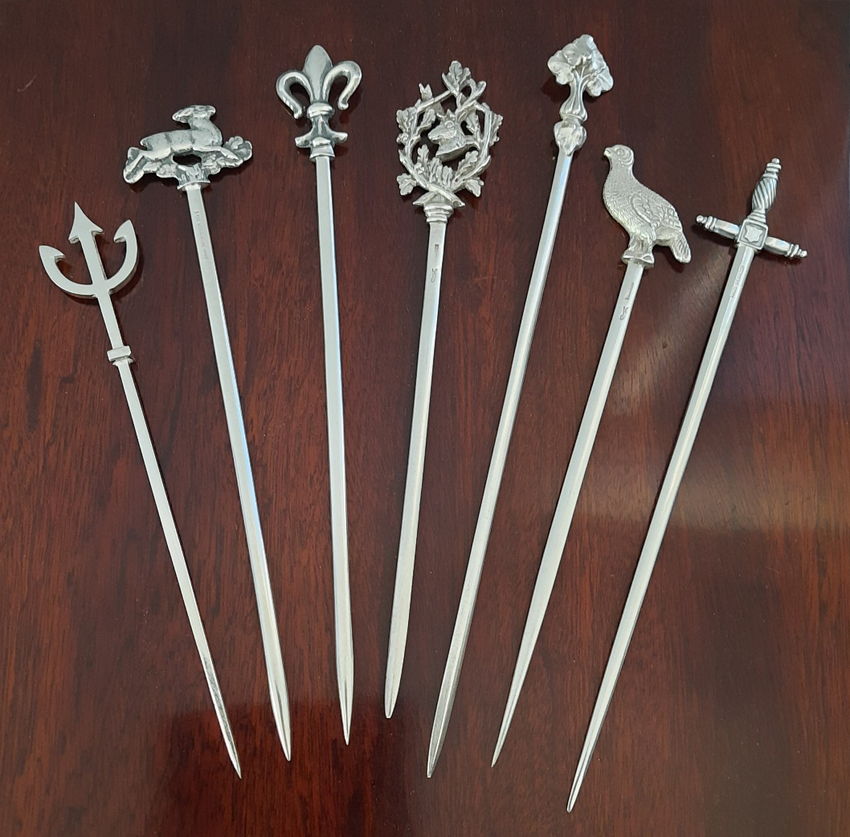
Die Sammlung besteht aus:
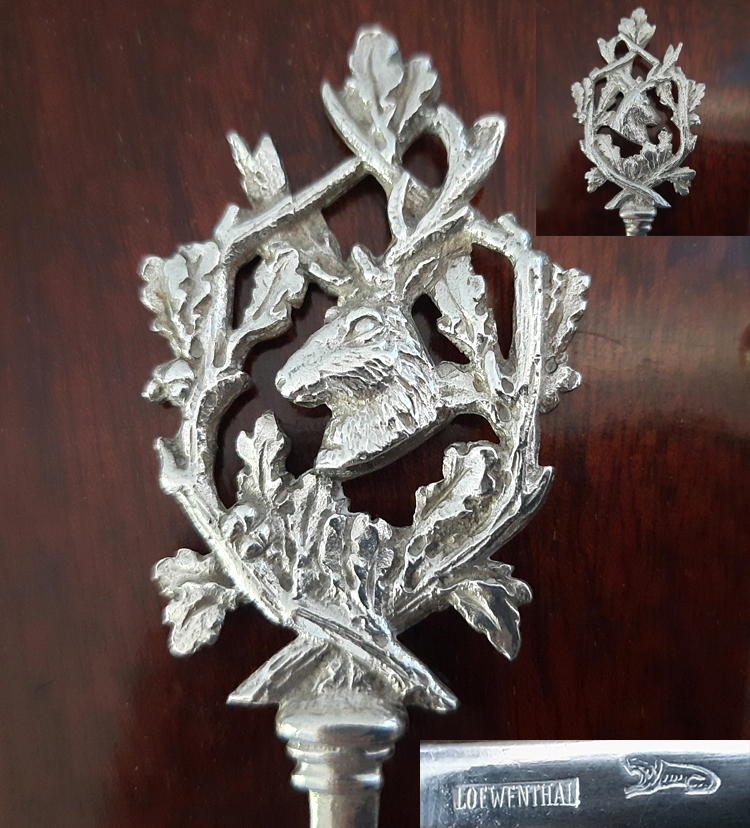
- 2 Spieße mit LOEWENTHAL-Punze
und liegendem Löwen (Hirschkopf im
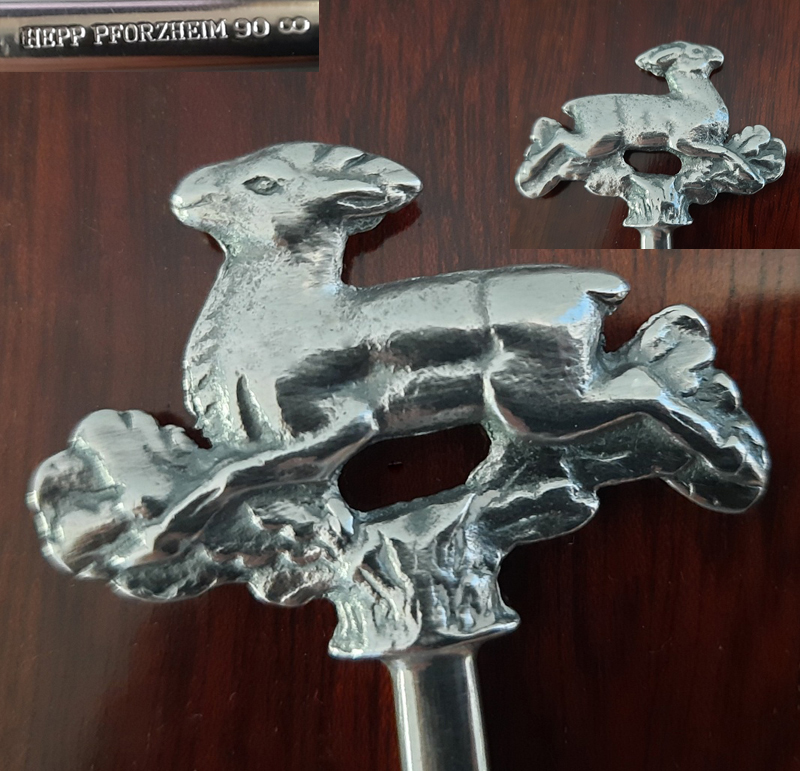
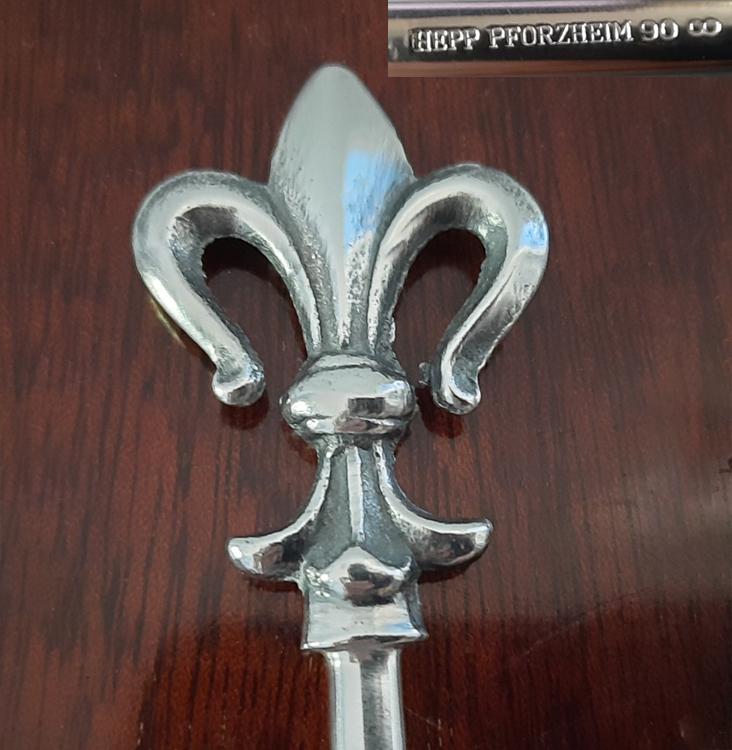
Eichenkranz sowie Rebhuhn) - 2 Spieße mit HEPP Pforzheim-Punze
und Qualitätsangabe 90 (Hase und
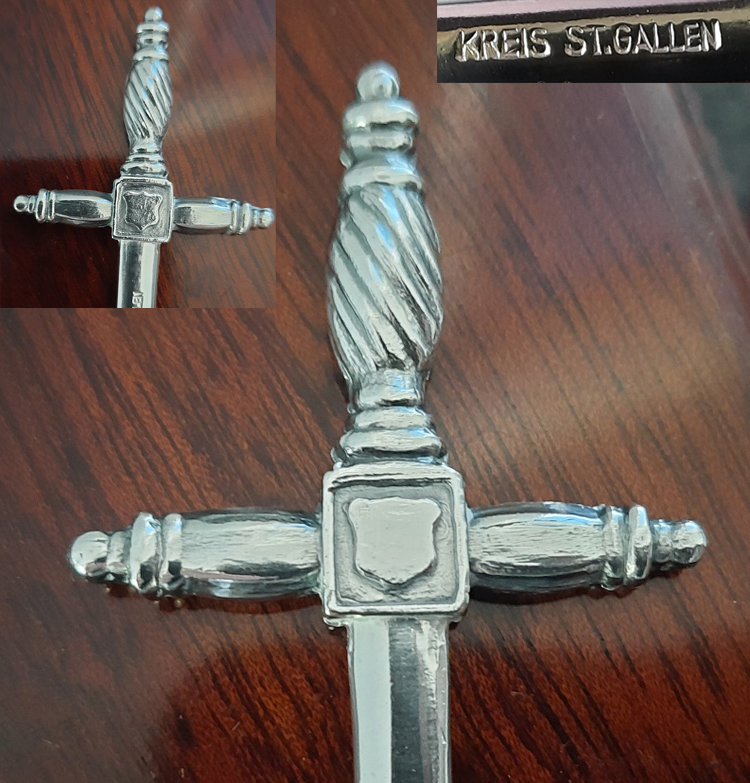
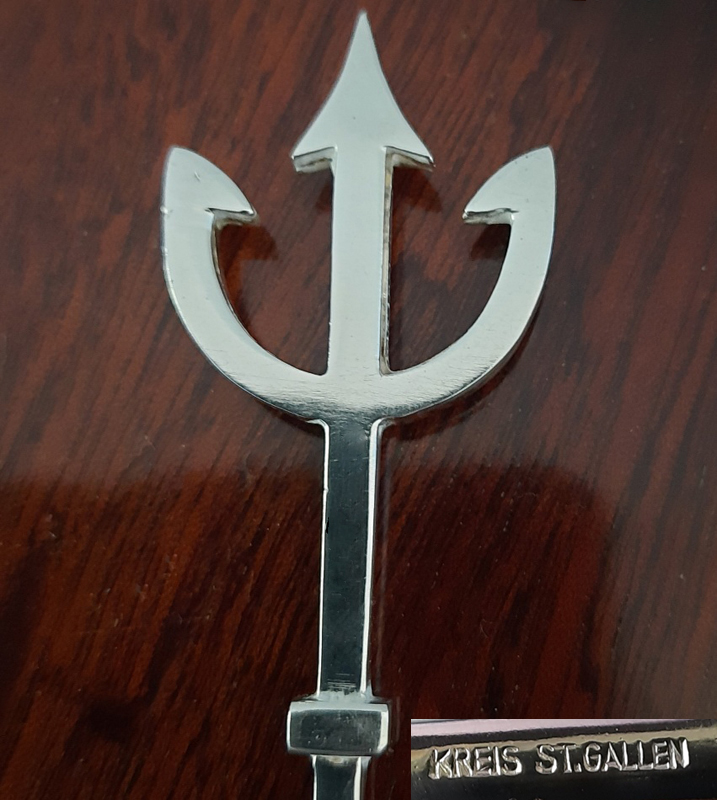
Fleur-de-Lys/Lilie) - 2 Spieße mit KREIS St. Gallen-Punze
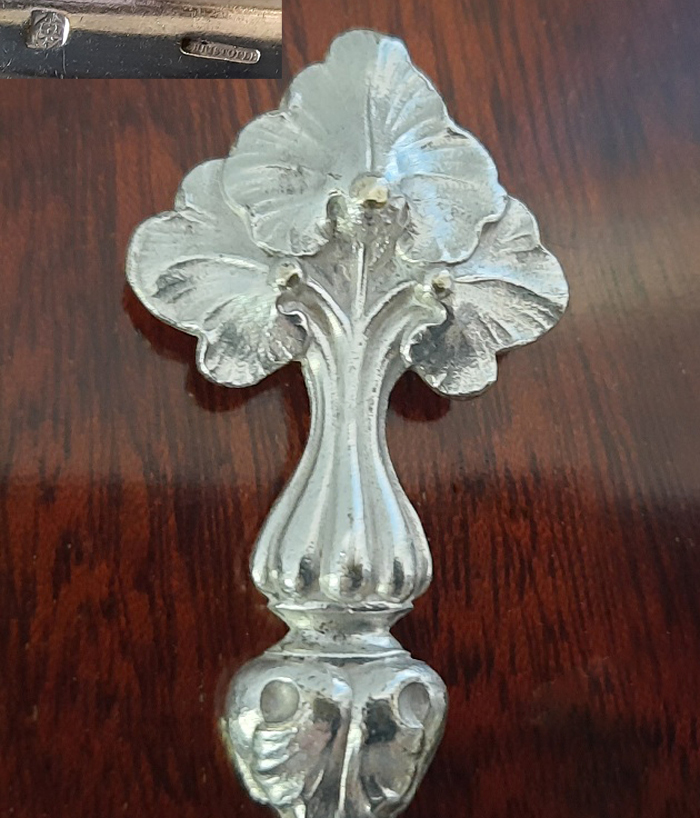
(Anker und Schwert/Kreuz) - 1 Spieß mit CHRISTOFLE-Punze
(Waage mit „CC“) und BlattmotivDie Längen variieren zwischen ca.
21 und 27 cm.
Gesamtgewicht ca. 300 g
Die dekorativen Endstücke zeigen typische
Motive der Zeit des Historismus und Jugend-
stils und machen die Spieße sowohl als Ge-
brauchsgegenstände als auch als Sammler-
stücke interessant.
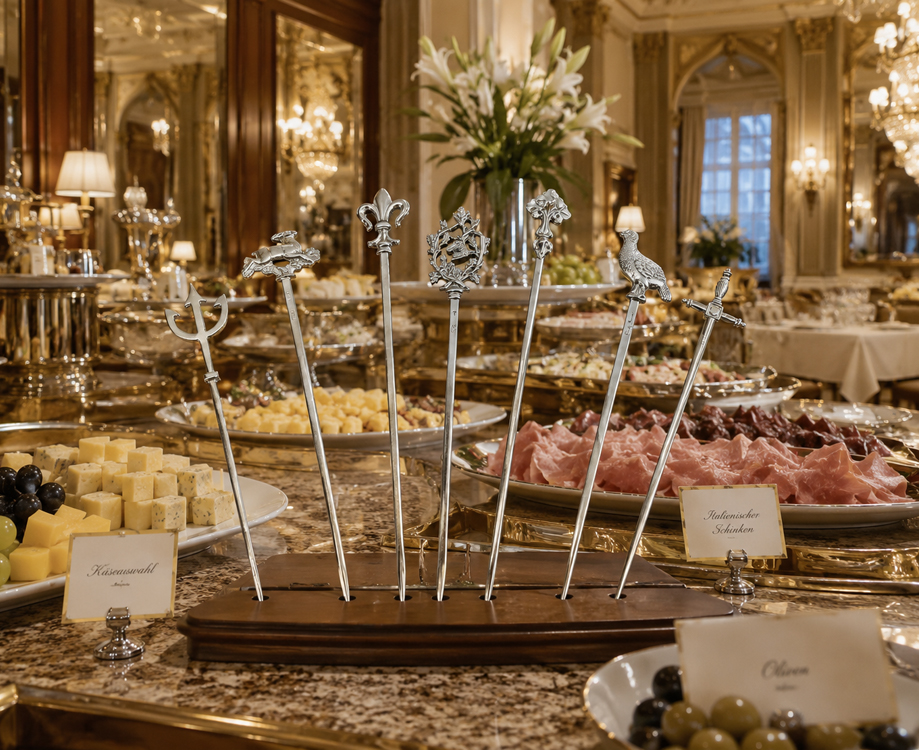
Die Spieße dienten ursprünglich zum stil-
vollen Servieren von Käse, Wurst, Obst,
Oliven, Horsd’œuvres und Canapés
sowie als individuelle Cocktail- oder Buffet-
spieße. Auf Jagdtafeln wurden sie auch zum
Aufnehmen kleiner Wildbissen oder als
dekorative Tischaccessoires verwendet.
Vergleichbare Stücke werden heute häufig
als Cocktail Picks, Horsd’œuvre-Picks
oder Buffetspieße bezeichnet.
Die Hersteller zählen zu renommierten
europäischen Silberwarenhäusern;
besonders Christofle (Frankreich),
Hepp (Deutschland) und Egon Kreis
St. Gallen (Schweiz) stehen für hoch-
wertige versilberte Tafelgeräte.
Die seltene LOEWENTHAL-Punze
mit liegendem Löwen ist bislang nur
wenig dokumentiert. Es dürfte sich um
die Frankfurter Handelsfirma S. & D.
Loewenthal handeln, welche um 1900
u.a. die von der Silberschmiede
Bohrmann, Frankfurt, gefertigten
Artikel vertrieb.
Antiker Zustand mit teils deutlichen
alters- und nutzungsbedingten Gebrauchs-
spuren wie Putzspuren, kleinen Kratzern.
Originale Versilberung ist überall gut
erhalten.
——————————-
Set of 7 Antique Silver-Plated
Cocktail & Hors d’Oeuvre Picks,
c. 1885–1920
The collection consists of:
* 2 picks bearing the LOEWENTHAL
hallmark and a recumbent lion mark
(stag’s head within an oak wreath and
partridge finials)
* 2 picks with the HEPP Pforzheim hall-
mark and quality mark “90” (hare
and fleur-de-lis finials)
* 2 picks with the KREIS St. Gallen hall-
mark (anchor and sword/cross finials)
* 1 pick with the CHRISTOFLE hallmark
(balance scale with “CC”) and a leaf finial
The picks range in length from approximately
8¼ to 10⅝ inches.
Total weight: approximately 10.6 oz.
The decorative finials feature motifs typical
of the Historicist and Art Nouveau periods,
making these pieces desirable both as func-
tional serving utensils and as collectible
antiques.
Originally, these elegant serving picks were
used for presenting cheese, cured meats,
fruit, olives, hors d’oeuvres, and
canapés, as well as individual cocktail or
buffet picks.
At hunting banquets, they were also used for
serving small game delicacies or as decorative
table accessories. Comparable examples are
now commonly referred to as cocktail picks,
hors d’oeuvre picks, or buffet picks.
The makers represented are among Europe’s
most respected manufacturers of silver-plated
tableware. Christofle (France),
Hepp (Germany), and Egon Kreis
St. Gallen (Switzerland) are particularly
well known for producing high-quality silver-
plated flatware and serving pieces.
The rare LOEWENTHAL hallmark with the
recumbent lion remains only sparsely docu-
mented. It is believed to relate to the
Frankfurt trading firm S. & D. Loewenthal,
which around 1900 marketed silver-plated
wares produced by the Bohrmann silver-
smith workshop in Frankfurt.
Antique condition with age-appropriate
signs of use, including polishing marks,
light scratches, and general wear consistent
with age. The original silver plating remains
well preserved throughout.
Rezensionen
Es gibt noch keine Rezensionen.