

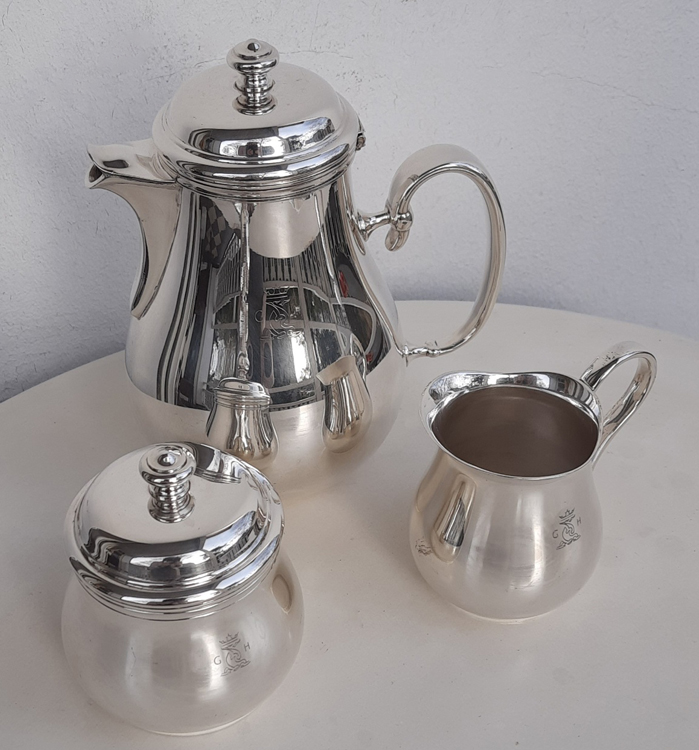

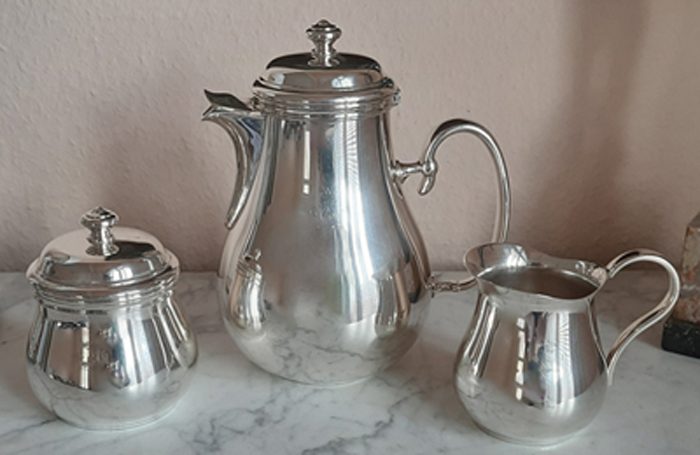
Puristische Eleganz & zeitlose Zurückhaltung: Versilberter Teekern von Christofle aus französischem Grandhotel an der Côte d’Azur
€750.00
nach §25a UStG Differenzbesteuert,
berechtigt nicht zum Vorsteuer-Abzug
zzgl. Versand
1 vorrätig
Beschreibung
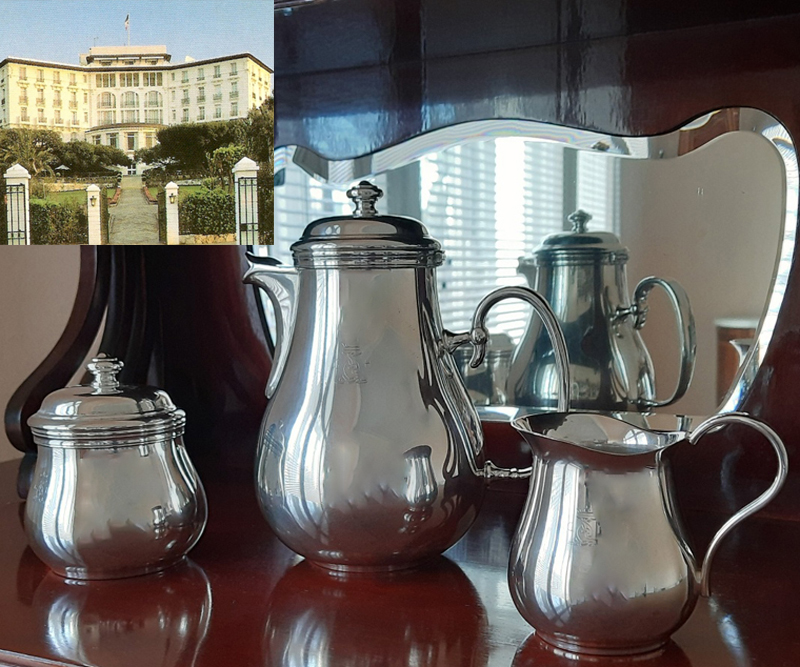
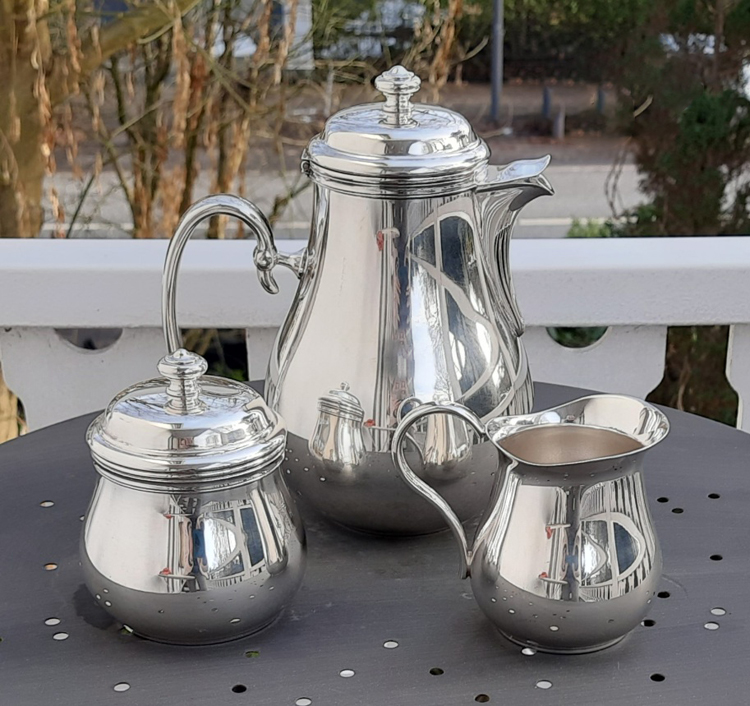
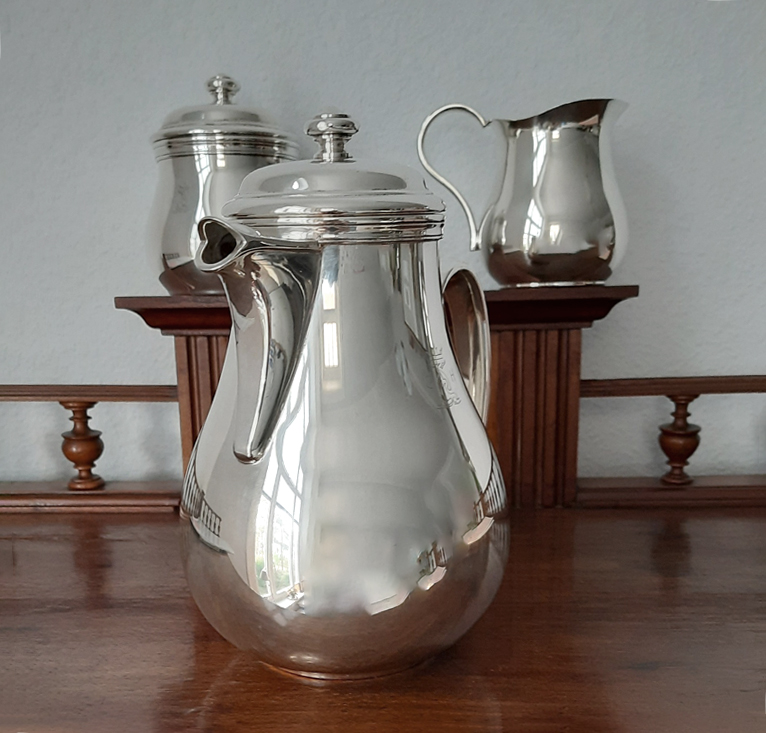
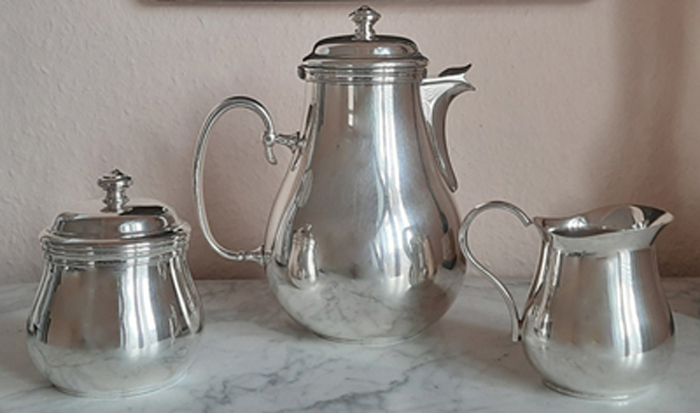
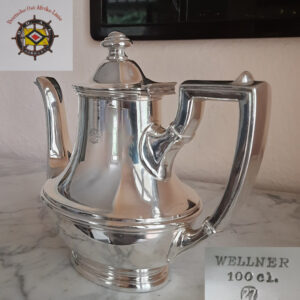
3-teiliger Teekern 1960er Jahre
versilbert
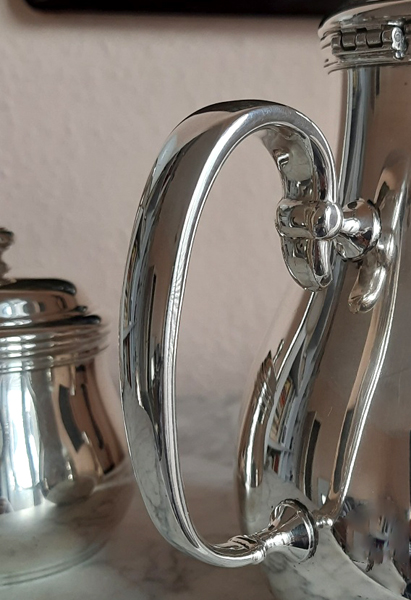
Teekanne, Zuckerdose mit Deckel,
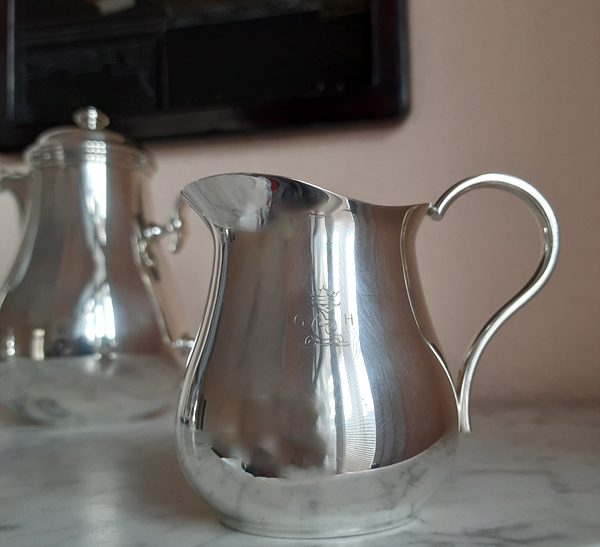
Sahnegießer
massive, hochwertige Qualität
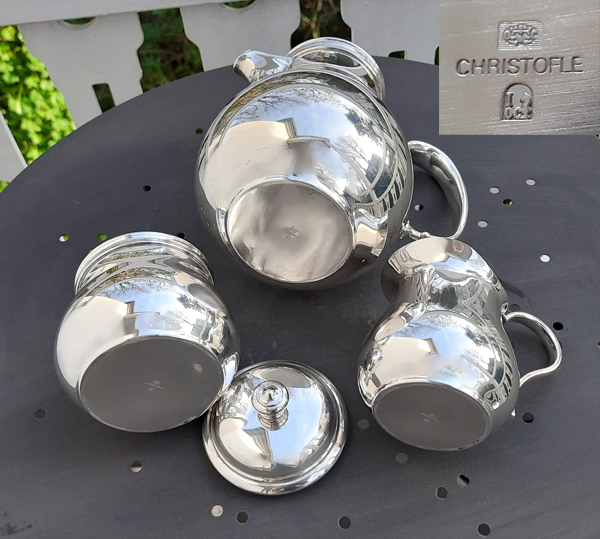
französischen Silberschmiede Christofle
alle Teile sind bodenseitig punziert
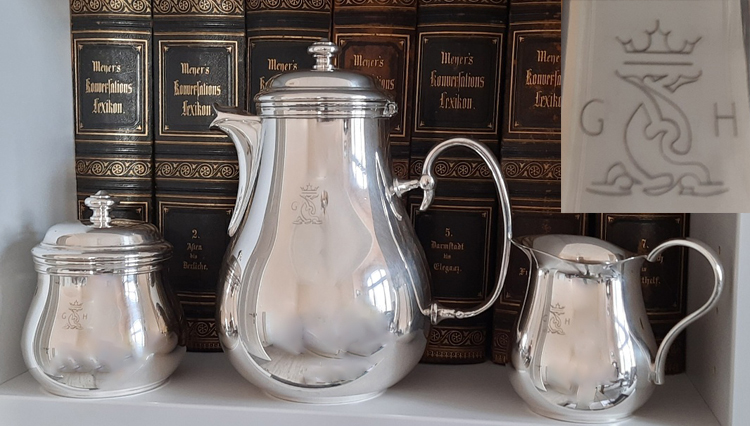
aus dem Suiten-Service des
Grandhôtel du Cap Ferrat, Côte d’Azur
alle Teile tragen vorderseitig das Hotel Signet
Maße:
Teekanne: Höhe ca. 21 cm
Breite ü/a ca. 17 cm
∅ Boden + Öffnung je ca. 7 cm
Volumen ca. 1,2 Liter – Gewicht ca. 802 g
Zuckerdose: Höhe/Deckel ca. 12 cm/
o. Deckel ca. 8 cm
∅ Boden + Öffnung je ca. 7 cm
Volumen ca. 350 ml – Gewicht ca. 308 g
Sahnegießer: Höhe ca. 10 cm
∅ Boden ca. 5,5 cm
Volumen ca. 250 ml – Gewicht ca. 196 g
Dieser Teekern gehört zu der Produkt-Serie
„Albi“, die Christofle seit den 1960er Jahren
entworfen hat und bis heute herstellt.
Sie zeichnet sich durch eine klare zeitlose
Formensprache aus, die inspiriert wurde
von der Kathedrale Sainte-Cécile in
der französischen Stadt Albi
(zwischen Toulouse und Bordeaux).
Auffällig sind die ausgewogenen Propor-
tionen und der bewußte Verzicht auf Dekor.
Dadurch passt dieser Teekern sowohl
zu formellen Tafeln als auch zu modernem
Minimalismus. Der Fokus wurde hier auf
Form, Material und Verarbeitung gelegt.
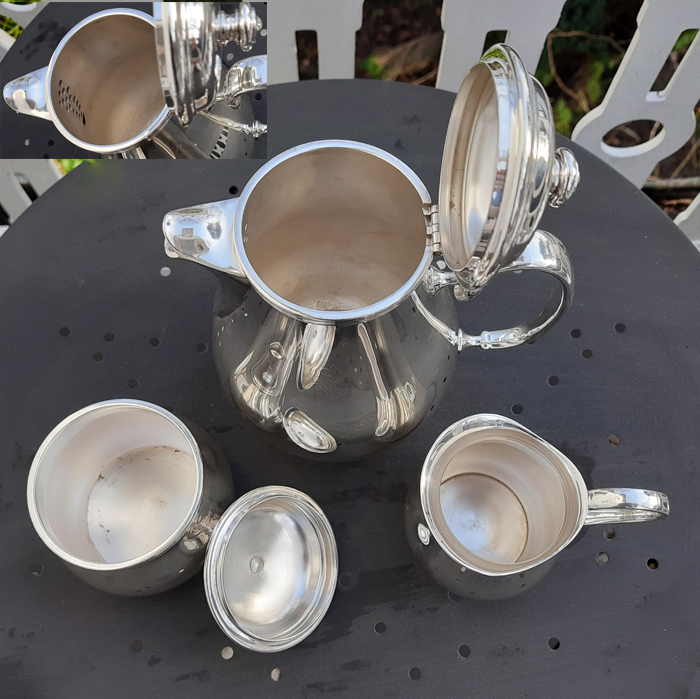
Die Teekanne ist perfekt isoliert, so dass
der Griff nicht warm wird, der Tee aber lange
heiß bleibt. Die kurze oben angesetzte Tülle
gießt ohne zu tropfen. Innen am Ausgießer
befindet sich ein eingelassenes Sieb, damit
beim Eingießen lose Teeblätter zurückgehalten
werden.
Sehr schöner gepflegter Zustand mit
normalen alters- und nutzungsbedingten
Gebrauchsspuren wie zarte Putzspuren,
minimaler Abrieb im Innenbereich der Tee-
kanne und Zuckerdose.
Originale qualitätsvolle Versilberung
ist ansonsten sehr gut erhalten.
Das „Grand Hotel du Cap Ferrat“ öffnete
seine Türen im Februar 1908. Von Anfang an
zog es die Menschen an, die dem himmel-
blauen, sanften Winter verfallen waren:
Herzöge und Prinzen der kaiserlichen Familie
von Russland und anderen europäischen Höfen,
Lords und Barone von England, kosmopoli-
tische Persönlichkeiten des hohen Finanz-
wesens, der Industrie der Literatur.
Berühmte Schauspieler wie Charles Boyer
Greta Garbo und Elisabeth „Liz“ Taylor
waren hier häufig zu Gast. Prinzessin Louise,
Tochter der Königin Victoria von England,
verbrachte gemeinsam mit ihrem Bruder,
dem Herzog von Connaught viele lange
Winter im „Grandhotel du Cap Ferrat“.
Der berühmte Schriftsteller William Somerset
Maugham erkrankte um 1900 an Lungen-
tuberkulose, die er versuchte, in Südfrank-
reich auszukurieren.
Seit der Eröffnung des „Grandhotel du
Cap Ferrat“ hatte er sich häufig über mehrere
Monate dort einquartiert wegen der außer-
gewöhnlichen Betreuung des Hotelpersonals
sowie des einzigartigen Klimas, das an der
Côte d’Azur herrscht. Als der berühmte
Schriftsteller im Dezember in seinem Haus
in Cap Ferrat 1934 an Tuberkulose ver-
storben war, wurde die Bar im
„Hotel du Cap Ferrat“ nach ihm benannt:
W. Somerset Maugham-Pianobar.
In den 1980er Jahren wurde das Hotel auf-
wendig renoviert. Ein Teil des Kleininventars
wurde dabei veräußert und gelangte
so in den französischen Antiquitätenhandel.
________
3-piece silver-plated tea set, 1960s
Teapot, lidded sugar bowl, cream jug
Solid, high-quality craftsmanship by the
French silversmith Christofle.
All pieces are hallmarked on the base.
Provenance: from the suite service of the
Grand Hôtel du Cap Ferrat, Côte d’Azur.
All pieces bear the hotel insignia on the front.
Dimensions:
Teapot: height approx. 8.3 in
width incl. handle/spout approx. 6.7 in
base diameter + opening diameter each approx. 2.8 in
capacity approx. 1.27 quarts (40.6 fl oz)
weight approx. 1.77 lb
Sugar bowl: height incl. lid approx. 4.7 in /
without lid approx. 3.1 in
base diameter + opening diameter each approx. 2.8 in
capacity approx. 11.8 fl oz
weight approx. 0.68 lb
Cream jug: height approx. 3.9 in
base diameter approx. 2.2 in
capacity approx. 8.5 fl oz
weight approx. 0.43 lb
This tea set belongs to the “Albi” product
series, designed by Christofle in the 1960s
and still in production today.
It is characterised by a clear, timeless
design language inspired by the Cathedral
of Sainte-Cécile in the French city of Albi
(between Toulouse and Bordeaux).
Notable features include the balanced
proportions and the deliberate absence
of decoration. As a result, this tea set
suits both formal table settings and modern
minimalism.
The focus is placed on form, material and
craftsmanship. The teapot is perfectly
insulated so that the handle does not become
warm while the tea remains hot for a long time.
The short, top-mounted spout pours without
dripping. Inside the spout there is an integrated
strainer that retains loose tea leaves when pouring.
Very attractive, well-maintained condition
with normal age- and use-related signs of wear
such as light polishing marks, minimal wear inside
the teapot and sugar bowl. The original high-
quality silver plating is otherwise very well
preserved.
The Grand Hôtel du Cap Ferrat opened
its doors in February 1908. From the very
beginning it attracted people who were
enchanted by the sky-blue, mild winters:
dukes and princes of the Russian imperial
family and other European courts, lords
and barons from England, cosmopolitan
figures from high finance, industry and
literature.
Famous actors such as Charles Boyer,
Greta Garbo and Elizabeth “Liz” Taylor
were frequent guests. Princess Louise,
daughter of Queen Victoria of England,
spent many long winters at the Grand
Hôtel du Cap Ferrat together with her
brother, the Duke of Connaught.
The famous writer William Somerset
Maugham fell ill with pulmonary tuber-
culosis around 1900 and attempted to
recover in southern France. Since the
opening of the Grand Hôtel du Cap Ferrat,
he often stayed there for several months at
a time because of the exceptional care
provided by the hotel staff and the unique
climate of the Côte d’Azur.
After the renowned writer died of tuber-
culosis in December 1934 at his home in
Cap Ferrat, the bar of the Hôtel du
Cap Ferrat was named after him: the
W. Somerset Maugham Piano Bar.
In the 1980s, the hotel underwent extensive
renovation. Part of the small inventory was
sold off and thus entered the French antiques
trade.
Rezensionen
Es gibt noch keine Rezensionen.